Here are Sheila Taormina’s Top 5 Reasons Triathletes Should Flip Turn:
1.You can learn to do a respectable flip turn in 30 minutes or less.
Who wouldn’t want to acquire a new skill in such a short period of time? It may be rough around the edges at first, but with persistent practice you can refine your turn to be sleek and dynamic within a few weeks. Eventually the flip turn will be quicker than your open turn, so the people in your lane who gain on you at every wall will no longer have that advantage.
2. It’s a great core workout.
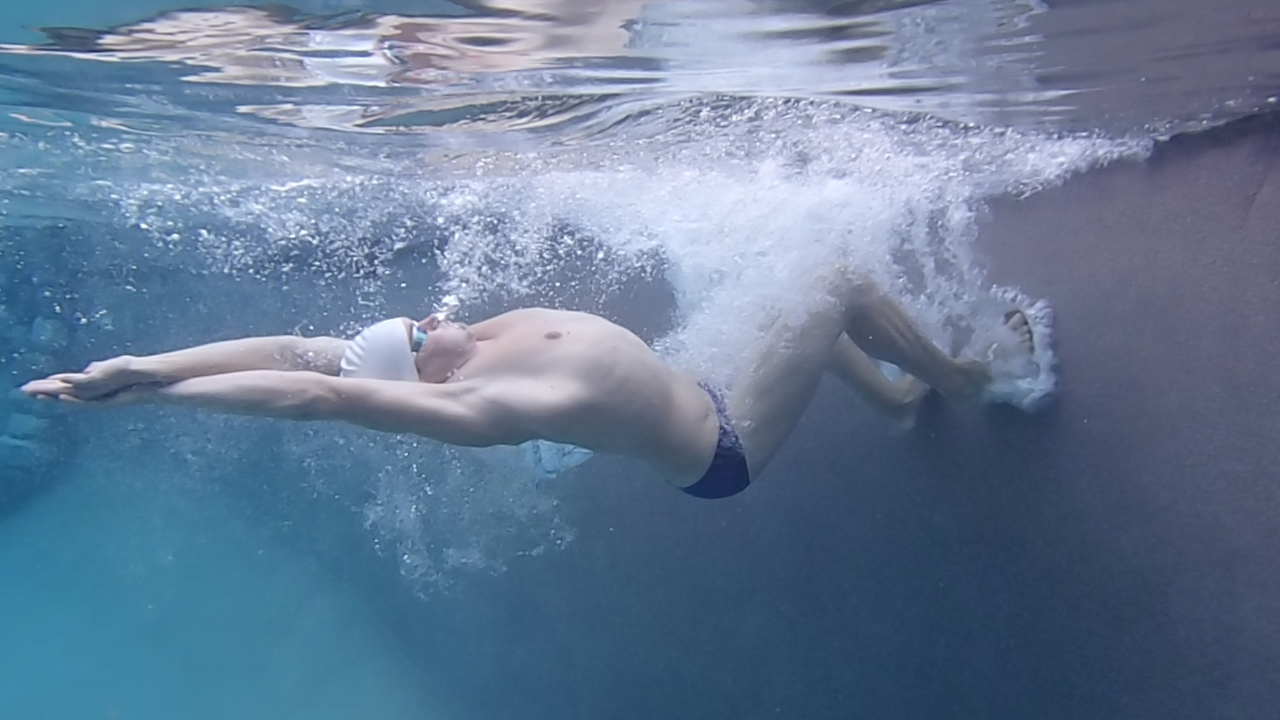
The turning motion involves going from a prone position to a tucked position and then back to prone. Athletes get a free core workout every length of the pool. You’ll notice your mid-section (front and back) tightening as the weeks go by.
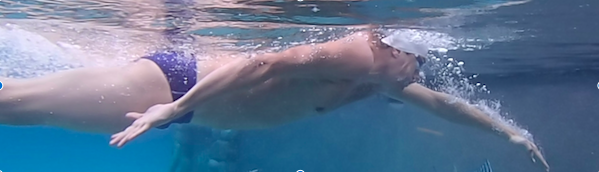
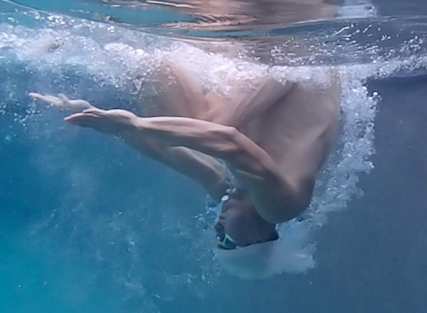
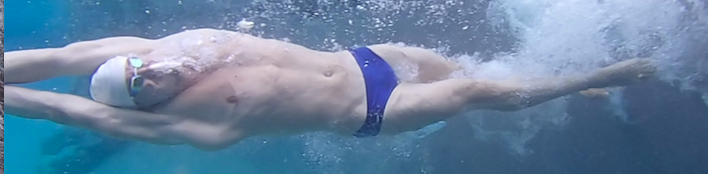
3. You experience a unique and fast fluid flow when doing a turn, which prompts you to feel and carry that speed at the surface while swimming.
If you have a half-way decent turn, then you will push off the wall at a speed that is greater than your swimming speed, and since your body is encased in water approximately 1 – 2 feet below the surface, you feel the speed of the water flow past your entire body. You will learn how to carry that speed as you stroke, making you a faster swimmer.
4. It is an athletic feat that hones your proprioceptive abilities.
Proprioception is the awareness of where your limbs and body are in space even when you cannot see them. Gaining proprioceptive abilities makes you a better athlete all around.
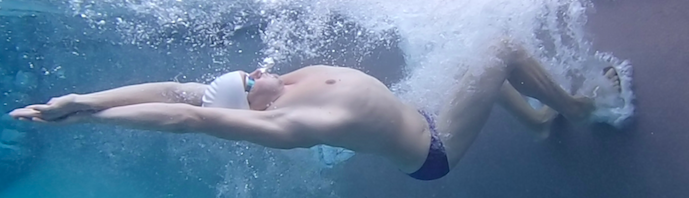
5. You’ll feel much more like a competitive swimmer rather than someone who does not feel completely at home in a pool.
Acquiring the skills that experts in a sport have mastered is always a great feeling.
Even though these 5 reasons sound alluring, I realize some of you have a few concerns, and I would like to address those:
Concern #1: Flip turns feel like cheating to triathletes, because they cut off the extra stroke into and out of the wall, and triathletes need stroking endurance for open water:
To overcome this concern, remember that you get plenty of stroking practice during your workout, and the core workout + athleticism you gain from flip turns far outweighs 10% more stroking.
Concern #2: Getting water in the sinuses, dizziness, or fear of hitting your head on the bottom of the pool.
These are legitimate concerns. Two of the three (water in the sinuses and hitting your head) are easily overcome by learning proper turn technique. Honing your proprioceptive ability will keep you from hitting your head on the bottom of the pool, and learning to blow air out of your nose while turning will prevent water from getting into your sinuses. For those of you who feel dizzy when you turn, this could be difficult to overcome (similar to the fact that no matter how much I would love to ride a roller coaster again, it’s not going to happen due to the utter nausea and dizziness I feel from it), but for many of you the dizziness is caused by moving your head too much. The head should push down approximately 1-2 feet deep to start the turning motion and then remain at that depth as the body tucks and the legs/feet rotate over the water. By knowing where your head is and not pushing it too deep (proprioceptive awareness) many of you will no longer experience dizziness.
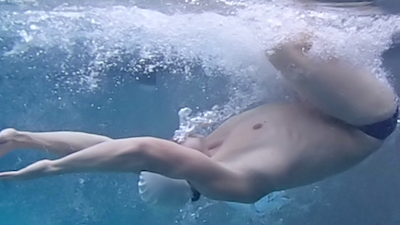
blow air our of your nose 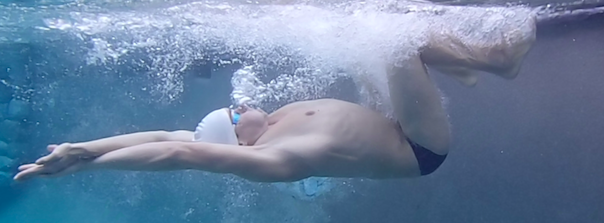
to prevent water from getting into your sinuses
I hope this information encourages you to give flip turns a try. Once you learn, you’ll always know how.
In another post I will point out the key elements for mastering turn technique.